
Pin Collecting
Blizzard Pin Collecting 101
A Beginner's Guide to Building a Blizzard Pin Collection
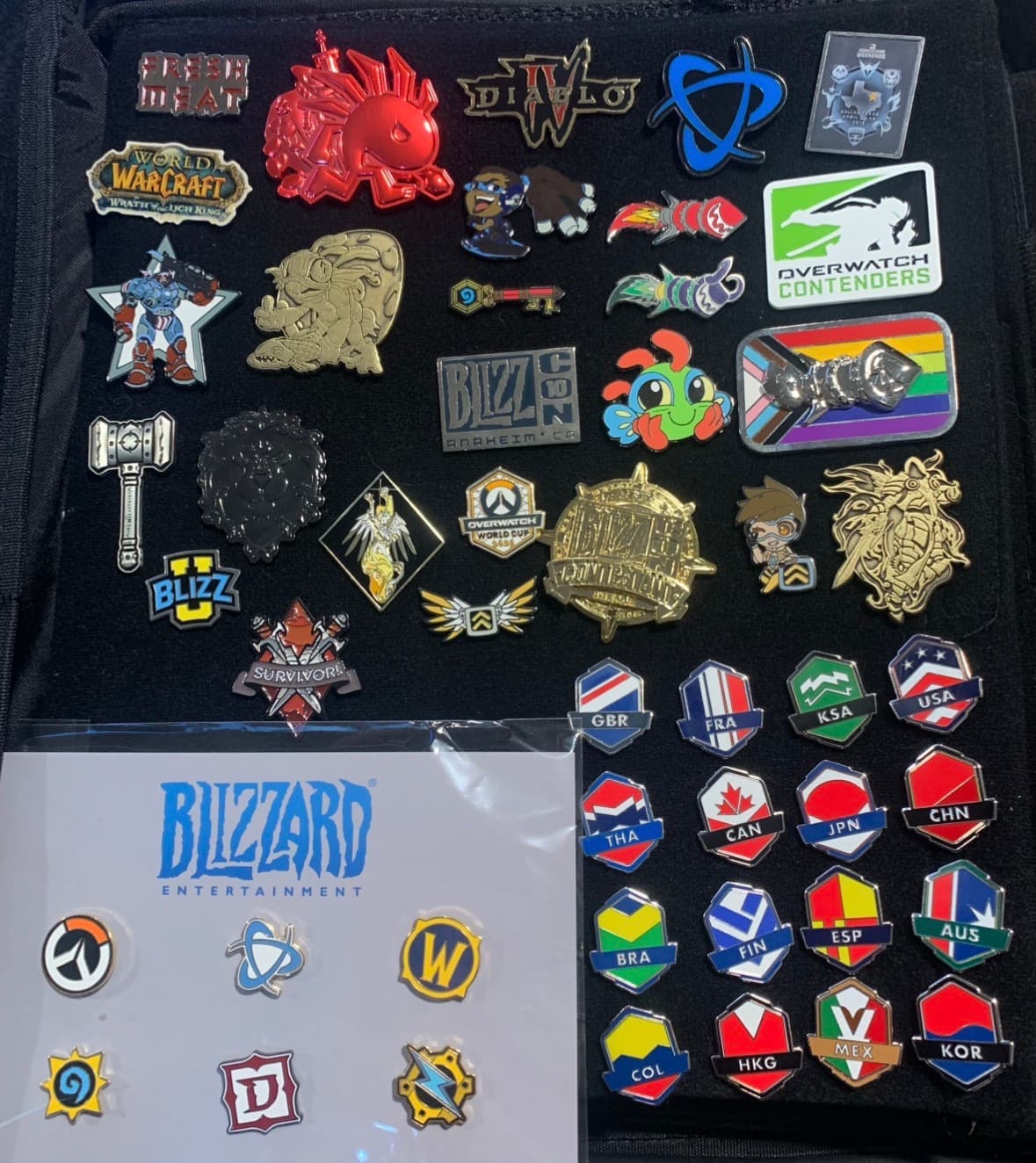
Maybe you picked up a World of Warcraft pin years ago.
Maybe you found a Diablo pin at an event.
Maybe somebody handed you a pin at BlizzCon.
Or maybe you just discovered that Blizzard has made a lot of pins and thought:
"These are cool. I think I want to collect them."
Welcome.
Blizzard pin collecting has grown into a hobby spanning more than a decade of games, characters, events, esports, employee items, special releases, and collector series.
Some pins are extremely common. Others can be surprisingly difficult to find.
And if you're just getting started, figuring out exactly what exists can feel a little overwhelming.
That's where this guide comes in.
Heading to BlizzCon 2026?
Blizzard's 2026 collector setup introduces some meaningful changes for pin collectors, including a new FiGPiN Mini Mystery format and a redesigned Darkmoon Faire Trading Post.
The new Mini Mystery set appears to be filling the role traditionally occupied by the standard BlizzCon blind-bag pin series, while the Trading Post includes dedicated boards for FiGPiNs Mini Set and Select Vintage Pins.
Blizzard has not said that the traditional numbered blind-bag series is permanently gone, so we're treating this as a 2026 format change rather than the end of that collecting program.
Where Did Blizzard Pins Come From?
Blizzard produced promotional and event pins before there was an official collecting program, but the Blizzard Collectible Pin Program launched in 2014.
The early numbered series established a format that longtime collectors will immediately recognize: a selection of characters and designs from across Blizzard's franchises, often with both standard versions and harder-to-find gold variants.
Those numbered series became one of the foundations of Blizzard pin collecting.
But they're only one part of the hobby.
Over the years, Blizzard has released hundreds of additional pins through events, merchandise stores, collector sets, esports, employee programs, promotions, anniversaries, and special releases.
That's where things start getting interesting.
What Counts as a Blizzard Pin?
This sounds like an easy question.
It isn't always.
Blizzard pin collecting covers a surprisingly wide range of releases, and collectors often organize them into several broad categories.
Numbered Series Pins
These are the backbone of the Blizzard Collectible Pin program. Series releases generally feature multiple Blizzard characters spanning different franchises. If you're new to collecting, these are one of the easiest places to begin because each series gives you a clearly defined set to work toward completing.
Collector's Edition & Standalone Pins
Not every Blizzard pin belongs to a numbered series. Blizzard has released many standalone collector pins tied to particular games, characters, anniversaries, events, artwork, or special releases.
BlizzCon & Event Pins
Many pins were created for specific conventions, promotions, or events. Sometimes the event itself is part of the design. Other times the pin looks like a normal character release but was only obtainable in one particular place.
Esports Pins
Blizzard's competitive gaming history has produced its own ecosystem of collectible pins, including league, team, tournament, championship, and event-related designs.
Employee Pins
Some pins were created for or distributed specifically to Blizzard employees rather than sold through normal retail channels. These can be much harder to document and locate than standard releases.
Special & Oversized Pins
Blizzard has also produced pins that don't fit neatly into the traditional series format, including oversized designs, special formats, unusual constructions, and limited collector releases.
You don't need to collect every category.
Most collectors eventually figure out which parts of the Blizzard pin universe are the most interesting to them.
Standard Pins & Gold Variants
This is one of the first things new collectors tend to notice.
You may find two pins featuring exactly the same character—but one is dramatically more gold.
That's intentional.
Many Blizzard series pins were produced in both a regular full-color version and a harder-to-find gold variant of the same design.
Standard
Gold Variant
You'll hear collectors call these golds, gold variants, or sometimes chasers.
Once you start collecting the gold versions, things get considerably more difficult.
The BlizzCon 2026 FiGPiN Mini Mystery Format
One of the most interesting changes for BlizzCon 2026 is the new FiGPiN Mini Mystery set.
For longtime collectors, this matters because BlizzCon has traditionally been associated with standard-sized mystery or blind-bag pin sets that gave attendees a defined group of pins to open, collect, and trade throughout the convention.
Based on Blizzard's announced 2026 Darkmoon Faire lineup, the FiGPiN Mini Mystery format appears to be filling that role this year.
Is the Traditional Blind-Bag Series Gone?
We don't know.
Blizzard has not explicitly said that the FiGPiN Mini Mystery set permanently replaces the traditional numbered blind-bag series.
What we can say is that the Mini Mystery set appears to be the mystery pin format Blizzard is emphasizing for BlizzCon 2026.
There's another clue that Blizzard expects collectors to approach it like a set:
The 2026 Darkmoon Faire Trading Post includes a dedicated FiGPiNs Mini Set trading board.
That gives attendees a place to trade duplicates and work toward completing the mystery collection—the same behavior that has traditionally surrounded BlizzCon blind-bag sets.
Don't assume 'different' means 'worse'
The Mini format is a significant change, but we won't really know how collectors feel about it until we see the full set, packaging, distribution, and trading experience in person.
Exclusives & Limited Editions
You'll see the word exclusive frequently in collecting.
But exclusive and rare aren't necessarily the same thing.
An exclusive simply means an item had some restriction on where or how it was available.
- BlizzCon exclusive
- Event exclusive
- Store exclusive
- Employee exclusive
- Regional exclusive
- Promotional release
- Included with another product
A limited edition, meanwhile, may have a specific production quantity.
That information can be useful when trying to understand how difficult a pin may be to find.
But production quantity never tells the entire story.
What Makes a Blizzard Pin Rare?
This is where collecting gets interesting.
Rare doesn't simply mean old.
Several different factors can affect how difficult a pin is to locate.
Production Quantity
If relatively few were produced, fewer can eventually reach collectors.
How It Was Distributed
A pin sold online worldwide is very different from one handed out at a single event or through a limited promotion.
Gold or Special Variant
Some variants were intentionally more difficult to obtain than their standard counterparts.
Employee Distribution
Items that were never offered to the general public naturally have a different supply.
Age
Older pins have had more time to disappear into permanent collections, drawers, storage boxes, or simply get lost.
Demand
A pin may exist in decent numbers but still be extremely difficult to acquire if collectors rarely want to let it go.
Scarcity and demand are not the same thing
A pin can be genuinely difficult to find but have limited demand. Another pin may have been produced in larger numbers but feature a character everyone wants. That second pin can still be much harder to actually acquire.
Rare Doesn't Automatically Mean Valuable
This deserves its own section.
A pin being rare doesn't automatically make it expensive.
And a pin being expensive doesn't necessarily mean it's incredibly rare.
Supply + Demand
Imagine only 500 copies of a pin exist—but only 100 collectors care about it.
Now imagine 5,000 copies of another pin exist—but thousands of collectors want one.
Which one is harder to buy?
That's why character popularity, franchise popularity, appearance, completionists, and current collector interest can matter just as much as production numbers.
How Do I Know What a Pin Is Worth?
There is no single official price guide for retired Blizzard collectible pins.
Once an item is no longer available at retail, the collector market largely determines its value.
The most useful information usually comes from actual completed sales.
That's an important distinction.
If someone lists a pin online for $400, that tells you someone would like to receive $400.
It doesn't tell you that anyone has ever paid $400.
When evaluating a pin, consider:
- Recent sold prices
- How frequently it actually sells
- Condition
- Whether original packaging is included
- How often examples become available
- Current collector demand
BlizzardItems tracks estimated values for many pins in the database to make this easier.
But a collectible is ultimately worth what another collector is willing to pay for it.
Browse the Blizzard Pin Database →Condition Matters
Two copies of the same pin aren't necessarily equal.
Things that can affect condition include:
- Scratches
- Bent posts
- Damaged enamel
- Tarnishing or discoloration
- Missing backers
- Damaged or missing original packaging
- Manufacturing defects
Some collectors care deeply about original packaging.
Others immediately remove every pin and put it into a display case.
Neither approach is wrong.
But if you're buying a particularly valuable pin, look carefully at what you're actually getting.
Do I Need to Collect Everything?
Absolutely not.
In fact, trying to collect every Blizzard pin ever produced is one of the quickest ways to make the hobby feel overwhelming.
Instead, figure out what makes collecting fun for you.
Maybe you collect only:
Or maybe your entire collecting philosophy is:
"I buy pins that look cool."
That's a perfectly legitimate collection.
There's no finish line.
Sets Are a Great Place to Start
If you're someone who likes having a goal, pick a set.
Instead of looking at hundreds of Blizzard pins and thinking:
"Where do I even start?"
You can decide:
"I'm going to complete one series."
Now you have a checklist.
That little bit of structure can make collecting much more approachable.
Once you complete one set, choose another.
Or don't.
That's the nice thing about collecting.
Official Trading Boards at BlizzCon
Blizzard's official trading boards have been one of the most recognizable parts of the BlizzCon pin-trading experience.
Historically, collectors could trade an eligible pin for one displayed on a Blizzard-managed board according to that event's rules.
Because collectors were constantly taking pins and leaving others, the contents could change throughout the day.
BlizzCon 2026 Trading Post
Blizzard has announced a redesigned Trading Post for the 2026 Darkmoon Faire.
The official boards Blizzard has announced for 2026 are:
- FiGPiNs Mini Set
- Select Vintage Pins
- Capsule Magnets
- Capsule Keychains
For pin collectors, the two important boards are the FiGPiNs Mini Set and Select Vintage Pins boards.
Blizzard says the boards will be stocked at the beginning of each day and then evolve through fan trading.
That wording suggests the 2026 experience may feel different from the traditional repeated "board flip" system longtime attendees remember.
It doesn't necessarily mean Blizzard will never add pins during the day—we won't know the exact operation until we see it in person—but collectors should probably think of the new boards as evolving trading inventories rather than assume a fresh board will repeatedly appear.
Check the Vintage board early—and again later
If Blizzard seeds the Select Vintage Pins board with older desirable pins at the start of the day, early access could matter. But fan trades can also introduce interesting pins later, so the board may be worth checking more than once.
How Should I Store My Pins?
Once your collection starts growing, you'll need somewhere to put it.
Pin Books & Cases
Great for keeping larger collections organized and protected while still making them easy to browse.
Display Boards
Good if you actually want to see your collection instead of keeping it closed in a book.
Shadow Boxes
Excellent for displaying completed sets, particular franchises, or especially important pins.
Lanyards
Great for showing off a smaller selection, especially at events.
Original Packaging
Some collectors keep valuable or limited-edition pins attached to their original backing cards or sealed packaging.
There isn't one correct answer.
The best storage method is the one that lets you enjoy your collection while keeping it protected.
Taking Your Pins to BlizzCon?
Storage at home and carrying pins around a convention are two very different problems.
We have a separate guide covering binders, pin rolls, bag organization, flying with pins, show-floor storage, and how to keep your traders accessible without carrying your entire collection.
How to Carry, Store & Travel With Your Pins →Catalog Your Collection
This is the part people don't think about until suddenly they own 150 pins.
At some point you'll ask:
"Wait... do I already have this?"
That's exactly why we built BlizzardItems.com.
You can use BlizzardItems to:
- Identify Blizzard pins
- Search by name
- Browse by franchise
- Browse series
- See rarity information
- View release information
- See how an item was originally obtained
- Track estimated values
- Add pins to your personal collection
- Build a wishlist
As your collection grows, keeping it cataloged becomes increasingly useful.
It also makes it much easier to set goals.
Build a Wishlist Too
Your collection tells you what you have.
Your wishlist tells you what comes next.
When you find a pin you eventually want, add it.
You don't need to immediately start hunting it down.
Over time, your wishlist becomes a roadmap for your collection.
And there's something extremely satisfying about finally moving a pin from:
Don't Let Value Take Over the Hobby
It's fun discovering that something in your collection is valuable.
It's useful knowing approximately what your collection is worth.
And there's nothing wrong with pursuing rare pins.
But value is only one way to look at collecting.
A common $10 pin featuring your favorite character may mean more to you than a $300 employee pin.
A pin you picked up during a memorable trip may mean more than either of them.
The best collection isn't the most expensive one.
It's the one you're excited to look at.
A Beginner's Blizzard Pin Collecting Game Plan
1. Look through the BlizzardItems Pin Database.
Don't buy anything yet. Just see what's out there.
2. Pick something you like.
A franchise, character, series, event, or simply a style of pin.
3. Start small.
You don't need 50 pins to have a collection. Three pins you love is already a collection.
4. Create your BlizzardItems collection.
Catalog what you already own.
5. Build a wishlist.
Give yourself a few things to hunt for.
6. Learn before chasing expensive pins.
Understand rarity, condition, variants, and actual sold values first.
7. Don't worry about completing everything.
You won't. None of us will.
8. Let your collection evolve.
What you enjoy collecting today may be completely different a year from now. That's part of the fun.
Interested in Trading Your Pins?
Once you've started building a collection, you may eventually want to trade duplicates or hunt for specific pins from other collectors.
We keep that topic separate so this guide can stay focused on the collecting side of the hobby.
For BlizzCon 2026, there's also more to understand than just collector-to-collector trading. Blizzard's new Trading Post, the Select Vintage Pins board, the FiGPiN Mini Mystery set, and dedicated 30-minute trading tables all change how we'd approach the weekend.
One Last Piece of Advice
Collect what you like.
That's really it.
Not what someone tells you is rare.
Not what has the highest estimated value.
Not what you think you're supposed to collect.
Blizzard pins represent years of games, characters, events, artists, employees, esports, anniversaries, and community history.
Your collection doesn't need to represent all of that.
It just needs to represent the parts of Blizzard that matter to you.
Maybe that's your favorite game.
Maybe it's a character you've played for twenty years.
Maybe it's a pin you picked up at your first BlizzCon.
And maybe one pin turns into five.
Then twenty.
Then you find yourself buying a display case.
That's usually how this goes.
Welcome to Blizzard pin collecting.
— BlizzardItems